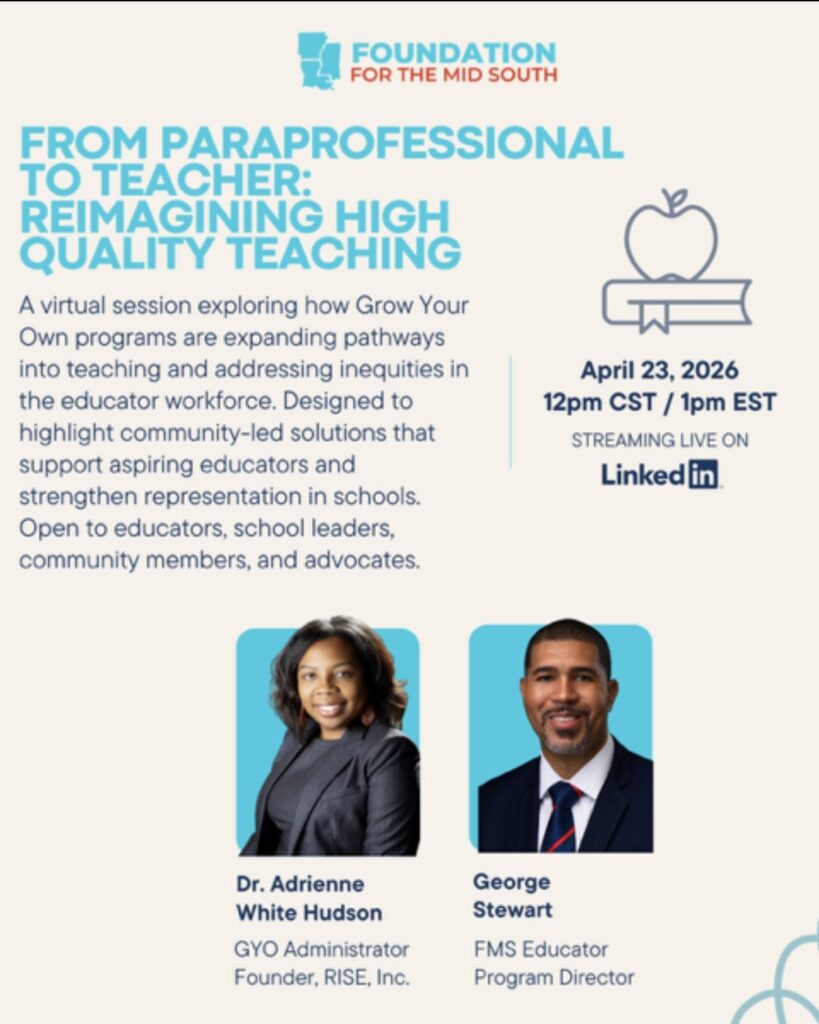
Across the Mid South, something important is taking shape. It is not driven by a single program or a single initiative. It is a shift in how communities are thinking about teachers, where they come from, and how they are supported.
For years, the conversation has centered on shortages. Vacancies. Gaps that feel difficult to close.
“We don’t just have a problem getting teachers into classrooms,” said George Stewart of the Foundation for the Mid South. “We have a problem keeping them there.”
That insight opens the door to a different kind of solution. One that is already gaining traction across the region.
A Stronger Starting Point
What if the next generation of great teachers is already in our schools?
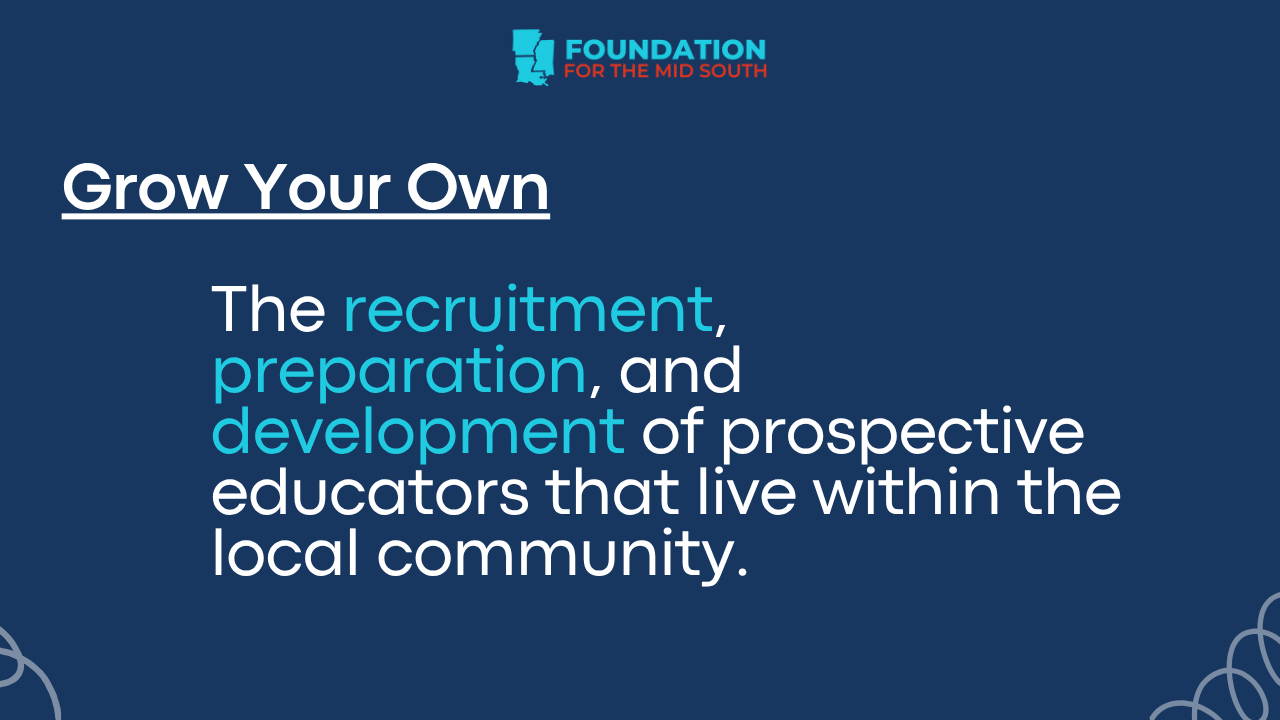
“A Grow Your Own program is the recruitment, preparation, and development of prospective educators from within the local community,” Stewart said. “When we invest in people who already live in the community, they’re far more likely to stay and teach there.”
That approach builds on something powerful. Familiarity. Trust. Connection.
Paraprofessionals. Teacher assistants. Community members who already understand students, families, and the day-to-day realities of the classroom.
“They’re closest to students,” Stewart said. “They understand the culture. And they can fill gaps quickly.”
This is a strategy rooted in proximity and purpose. It recognizes that talent is not missing. It is already present.
“We Decided to Fight for Our Teachers”
For Dr. Adrian Hudson, this work began with a simple but meaningful realization.
“I had teachers doing incredible work,” she said. “Strong relationships, great outcomes. But they couldn’t keep their license.”
The challenge was not ability. It was access.
“So we decided to fight for them the same way we fight for students,” Hudson said. “By removing those barriers.”
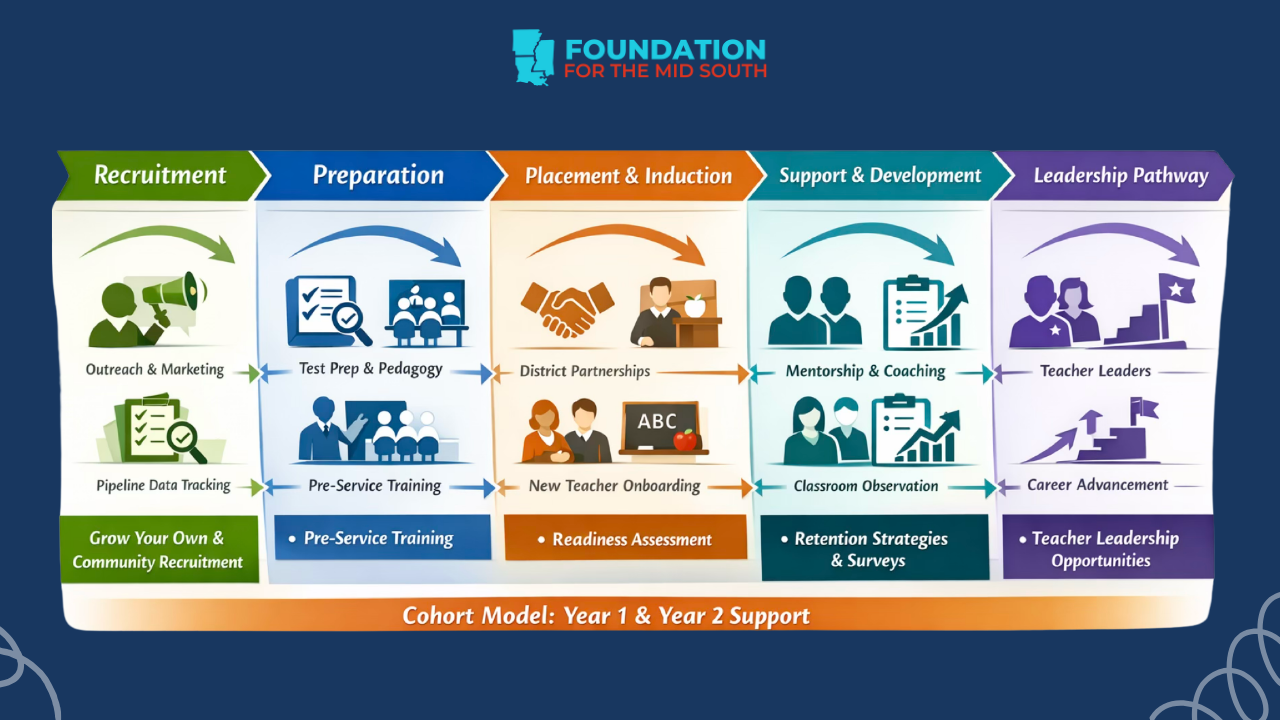
That decision led to the creation of RISE, an organization focused on helping aspiring educators move through certification, grow their skills, and stay in the profession.
“If we could do that for a few teachers,” she said, “why not create something that helps entire districts?”
That mindset continues to shape how communities approach teacher development today.
Recruitment That Feels Personal
The most effective recruitment strategies often begin with something simple. A conversation.

“Relationships are our best recruitment tool,” Hudson said.
She has seen firsthand how a single question can open new possibilities.
“I’ve recruited people who never even considered teaching,” she said. “It starts with asking, ‘Have you ever thought about becoming a teacher?’”
That invitation matters. It brings people into a profession that is both meaningful and impactful.
“There’s so much negative conversation around teaching,” Stewart said. “But it’s still one of the most impactful careers that exists.”
And that impact is visible every day. In classrooms. In communities. In the lives of students who are shaped by the people who teach them.
Support That Helps Teachers Thrive
Once educators step into the classroom, the focus shifts to growth and support.
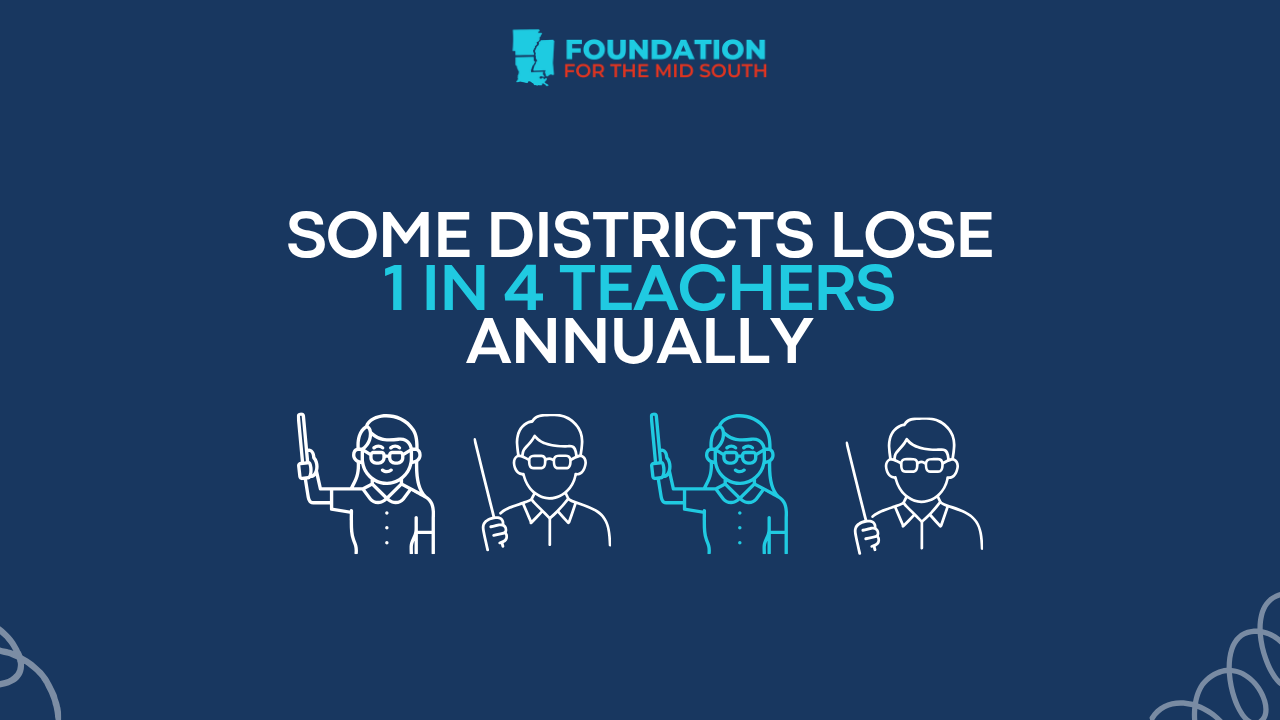
“Many teachers don’t leave because of pay,” Stewart said. “They leave because of a lack of support.”
That understanding has led to a more thoughtful approach to how teachers are supported.
“Most of the individuals in our program are balancing three to four major roles,” Hudson said. “They’re teachers, parents, community members.”
Programs like RISE are designed to meet people where they are.
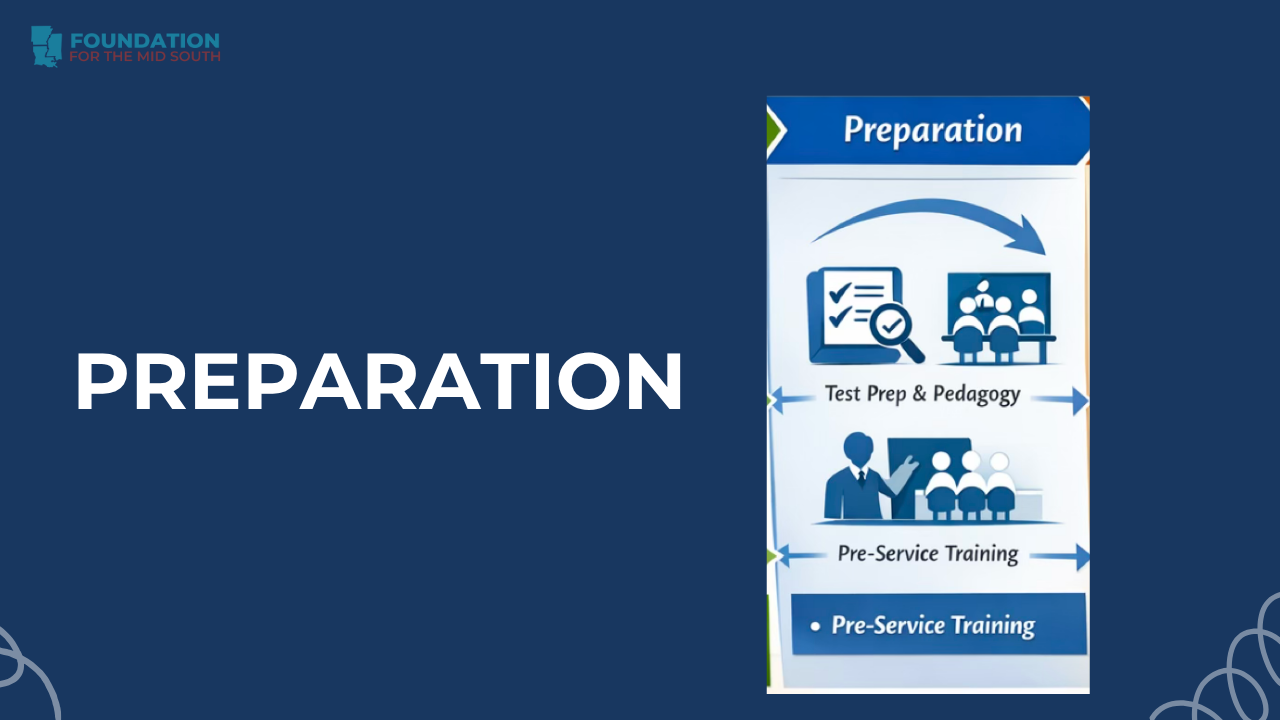
“Communication is everything,” she said. “You have to ask people what they need and actually build around that.”
That means creating systems that are flexible, responsive, and grounded in real experiences.
“Every cohort teaches us something new,” Hudson said. “We adjust based on what we see.”
Sometimes, that learning leads to unexpected insights.
“Most people were never actually taught how to study,” she said. “Studying is not rereading material. That’s not how the brain works.”
By addressing those gaps, programs are not only preparing teachers to pass exams. They are preparing them to succeed long term.
Partnerships That Strengthen the Work
At the heart of this approach is collaboration.
“One of the biggest lessons is that partnerships don’t have to look a certain way,” Hudson said.
Communities are finding creative ways to support educators. From financial resources to professional development to everyday support.
“If it helps you reach your goal,” she said, “it belongs at the table.”
That includes partners from across sectors.
“There’s a tendency to lean on one sector to fund this work,” Stewart said. “But for this to scale, it has to be a shared investment.”
When organizations, districts, and community partners work together, the impact is stronger and more sustainable.
Culture That Encourages Growth
Inside schools, culture plays a central role in teacher success.
“School culture is everything,” Hudson said.
When teachers feel supported and valued, they are more likely to stay and grow in their roles.
“When teachers feel heard and supported, they stay,” she said. “And when they stay, they bring others with them.”
That kind of environment creates momentum.
“My teachers became my best recruiters,” Hudson said. “They shared their experiences and encouraged others to join.”
It is a reminder that retention and recruitment are deeply connected.
Building for the Future
Sustaining this work takes commitment, creativity, and collaboration.
“It starts with people who are passionate about the work,” Hudson said.
And it continues with the resources needed to support that passion.
“We also need funding,” she added.
Communities are finding ways to contribute in meaningful ways.
“We’ve partnered with businesses to offer discounts to teachers,” Hudson said. “People want to help. They just need a way to do it.”
Sustainability grows from shared ownership. It evolves as needs change and opportunities emerge.
“It’s ongoing,” she said. “It evolves.”
Looking Ahead
The future of education in the Mid South is being shaped by people who are already part of the community.
“They’re already here,” Stewart said.
The work now is to continue building pathways that support them. To invest in their growth. To recognize their potential.
Because when communities invest in their own, the impact reaches far beyond the classroom.
Watch the full webinar replay here and continue the conversation.