
The Foundation for the Mid South recently gathered its leadership to unveil a new blueprint for the region. The webinar, titled “The Future We Are Building,” was presented as more than a routine announcement. Instead, it carried the tone of a pivotal moment for a region that has long carried the weight of deep and persistent inequities.
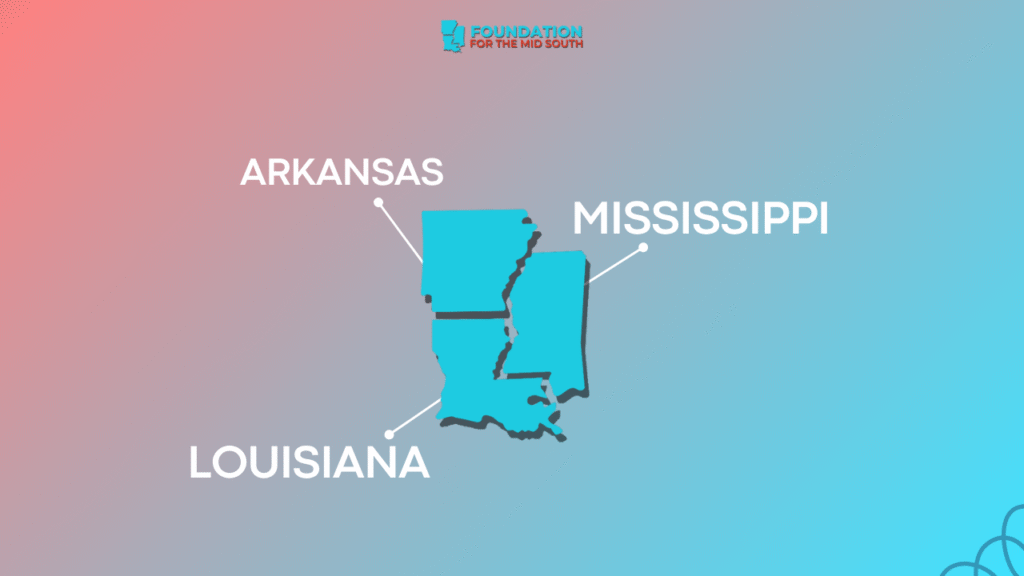
“We are playing the long game here,” said Communications Director Ebonee Johnikin, who moderated the conversation. “This is not just an announcement. Communication has to function as the backbone of accountability.”
For nearly thirty five years, the Foundation has worked at the intersection of poverty, education, health, and economic stability across Mississippi, Louisiana, and Arkansas. Its newly released 2025 to 2030 strategic plan is the organization’s most ambitious roadmap in years. The plan was shaped by listening sessions with parents, educators, business owners, and local leaders who described their hopes and hardships in clear and personal terms.
“Families want stronger schools, healthier lives, and real opportunities to thrive,” Johnikin said. “Their voices guided every step of this process.”
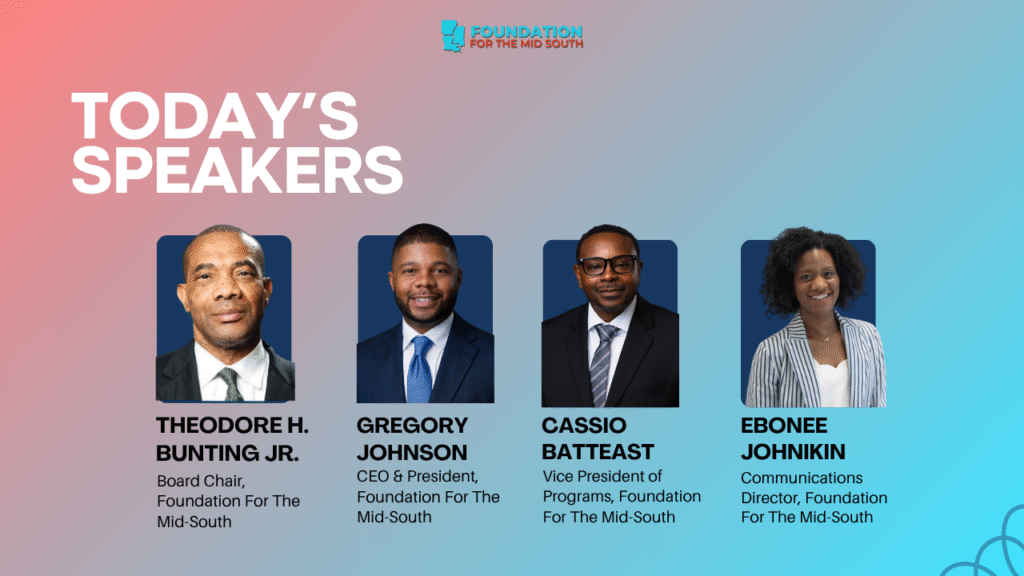
The region continues to hold close to thirty percent of the nation’s poverty. Despite that sobering reality, the tone of the webinar leaned toward possibility. Over and over, panelists returned to the idea that communities are ready for solutions that match the scale of their challenges.
A Region Confronts Its Realities
President and CEO Greg Johnson opened the discussion with a reminder of the Foundation’s mission. “If you spend any time on our website or with our team, you will hear that we are in the business of improving lives,” he said. “We believe the most powerful solutions come from the people who live closest to the problems.”
Johnson spoke about the hurdles facing the region, including generational poverty, fragile health care access, and uneven educational outcomes. Yet he made clear that the path forward is about more than naming the challenges.
“In our region, we face significant challenges, but we also see tremendous opportunity ahead,” he said. “Our communities deserve a roadmap that not only acknowledges their reality, but empowers them to act.”
Listening sessions across Mississippi, Louisiana, and Arkansas became the backbone of the plan.
Residents spoke openly about the barriers they face and the support they want. For Board Chair Theo Bunting, those conversations were essential.
“When your mission is centered on service, you cannot determine how to win without understanding the needs of the people you serve and what matters most to them,” Bunting said.
He explained that strategy only works when it stays connected to people’s everyday experiences.
“Strategy is not a book you put on a shelf,” he said. “We are united in purpose, and we are accountable to the people we serve. We have to be.”
Four Pillars, One Future
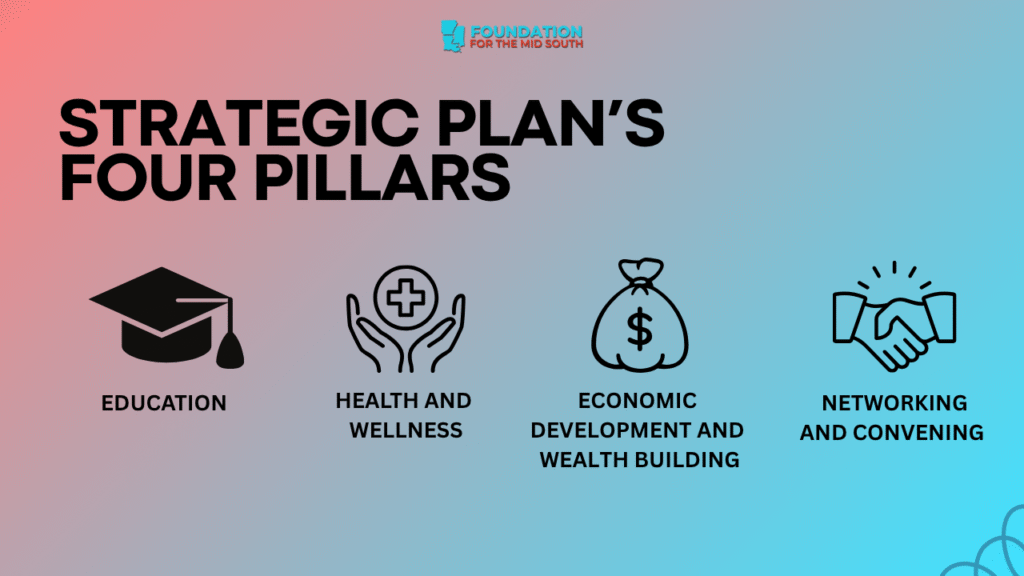
The Foundation’s new plan rests on four pillars that emerged repeatedly from community feedback. They are Education, Health and Wellness, Economic Opportunity and Wealth Building, and Networking and Convening.
Education: A Starting Point for Stability
“Education is where hope begins,” said Vice President of Programs Cassio Batteast.
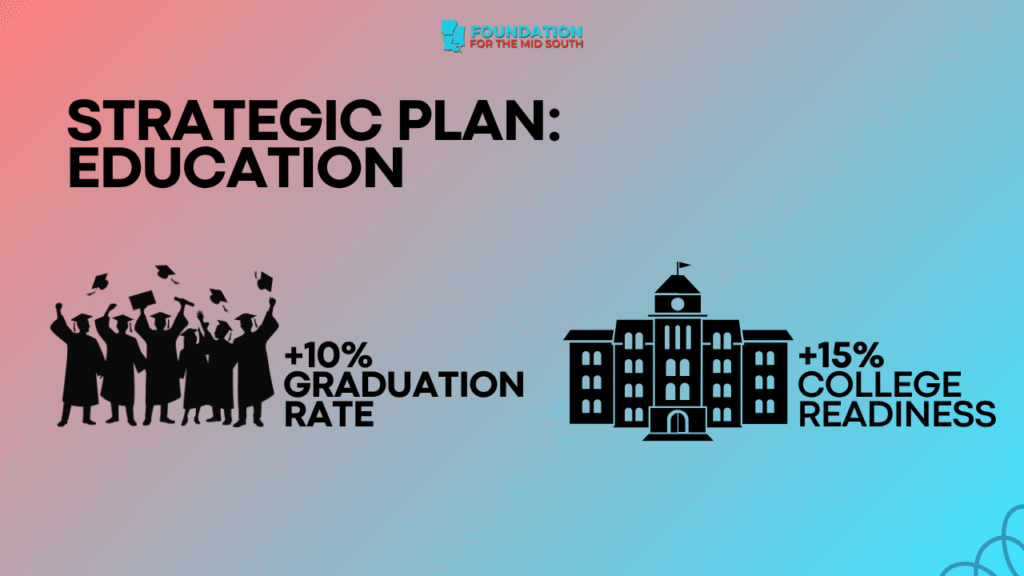
Residents described a pattern that begins early in a child’s life. Too many students enter high school behind grade level, and families often lack the tools to help them catch up. The plan sets goals for increased early childhood access, higher graduation rates, and stronger college and career preparation.
Health and Wellness: A Foundation for Community Well Being
“We cannot have healthy communities without healthy families,” Batteast said.
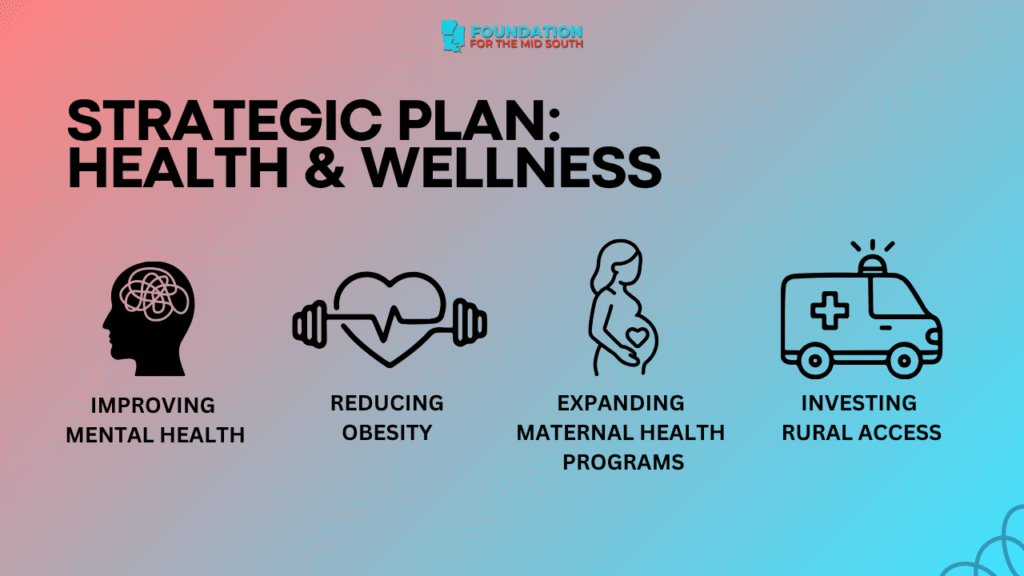
The plan aims to expand mental health access, improve maternal and infant health outcomes, and reduce obesity in communities that have limited health resources. The work includes support for local health programs, community gardens, and maternal health advocates who understand the specific challenges faced by Black and Brown women.
Economic Opportunity and Wealth Building: A Path to Long Term Security
“Economic progress affects every other part of family life,” Batteast said. “When families have stable income and opportunities to build savings, it strengthens education, health, and long term stability.”
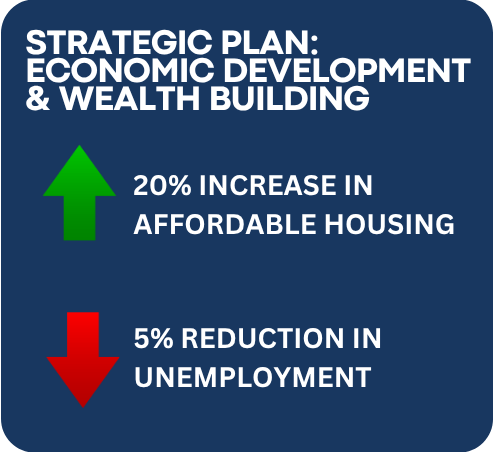
The Foundation plans to increase access to affordable housing, reduce unemployment, and expand opportunities for minority owned businesses. The goals are measurable, but they also represent the broader desire for stability that residents voiced throughout the listening sessions.
Networking and Convening: Breaking Isolation and Building Collaboration
“When we connect people, change thrives,” Batteast said. “We amplify what is possible.”
Residents expressed a strong desire for more coordinated efforts across organizations. The plan responds with commitments to host regional summits, partner gatherings, and cross sector learning opportunities.
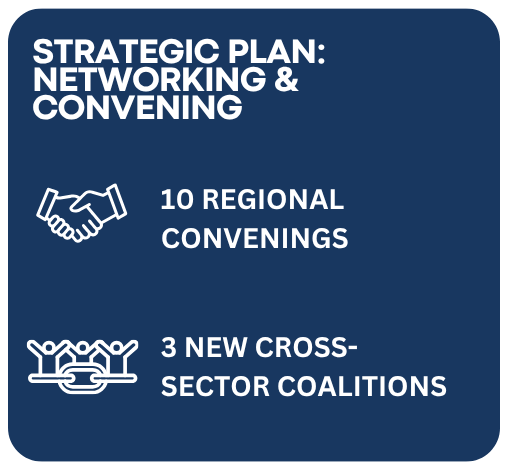
These are designed to help communities build shared understanding and move solutions from conversation to action.
Keeping the Work Visible
As the discussion shifted to implementation, Johnson invited Johnikin back into the conversation to highlight a critical part of the effort: the role of communication.
“Communication keeps us honest,” Johnikin said. “It reinforces that the public is not only an audience but a co author of this plan.”
She outlined several tools that the Foundation will use to keep residents informed, including storytelling, consistent updates, a public progress dashboard, and ongoing learning. “We want this plan to feel real, something people can see and feel in their daily lives,” she said.
Johnson added that the Foundation will use adaptive funding, which allows the organization to shift resources toward strategies that show the strongest results.
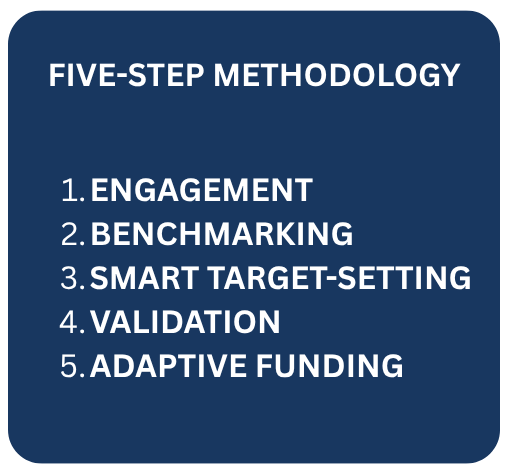
“We want to fund what works,” he said. “The plan is designed to learn and adjust as communities change.”
A Measure of Success
For all the complexity of the systems the plan seeks to address, Johnson offered a simple definition of success.
“This plan will be a success if every child is educated to their fullest capacity, if people are healthy enough to be active in their communities, and if families have food on the table and stability in their lives.”
The message was clear. Progress should be visible in the everyday lives of people.
A Region Looks Toward 2030
When asked what gives him hope, Johnson did not reference funding or numbers. Instead, he pointed to the people he sees across the region.
“What gives me hope are the people,” he said. “Our neighbors, the parents dropping their kids off at school, the folks heading to work every morning. The people who get up every day and do the work that keeps our communities going.”
Batteast shared a similar sentiment. “We have done great work building trust and connecting communities,” he said. “I am excited to see the outcomes of our investments.”
Johnikin closed the webinar with a message that captured the spirit of the plan. “One of our goals is for every community we serve to see themselves in both the process and the progress.”
In a region with a long history of inequity, the Foundation’s new strategic plan offers a framework for change that is both practical and hopeful. It is a document, but it is also a promise. A promise to listen, to act, and to build a future that reflects the voices of the people who call the Mid South home.
To hear directly from Foundation leadership and revisit the conversation that shaped the 2025 to 2030 Strategic Plan, the full webinar recording is available to watch.
Watch the Strategic Plan Webinar Replay