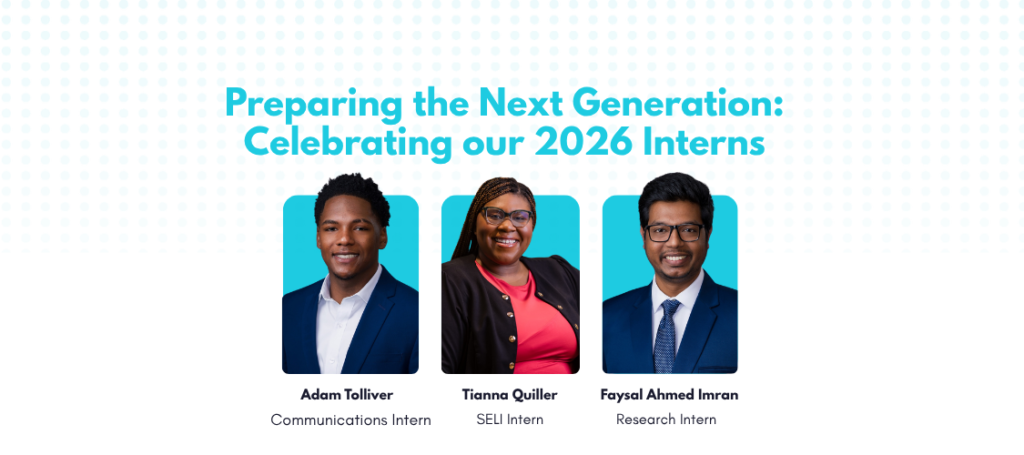
Every summer, the Foundation for the Mid South welcomes interns who show up, contribute to our team, and shape the work we do every day. This summer, three interns joined our team, bringing expertise in communications, public health research, and education policy, and did just that. Across ten weeks, they conducted research that will shape future grantmaking decisions, helped launch a community giving initiative, and built policy analyses that put data directly in service of the communities we serve.
“Often, people see the issues but never the dedicated individuals behind the solutions,” said Adam Tolliver, Communications Intern. Adam, Tianna, and Faysal were interviewed about their experience at the Foundation, what it was like working alongside experts in this space, and what’s next for them.
Meet the interns who spent their summer working to improve healthcare, economic opportunities, and education across the Mid South.
THREE DIFFERENT ROADS TO THE SAME REGION
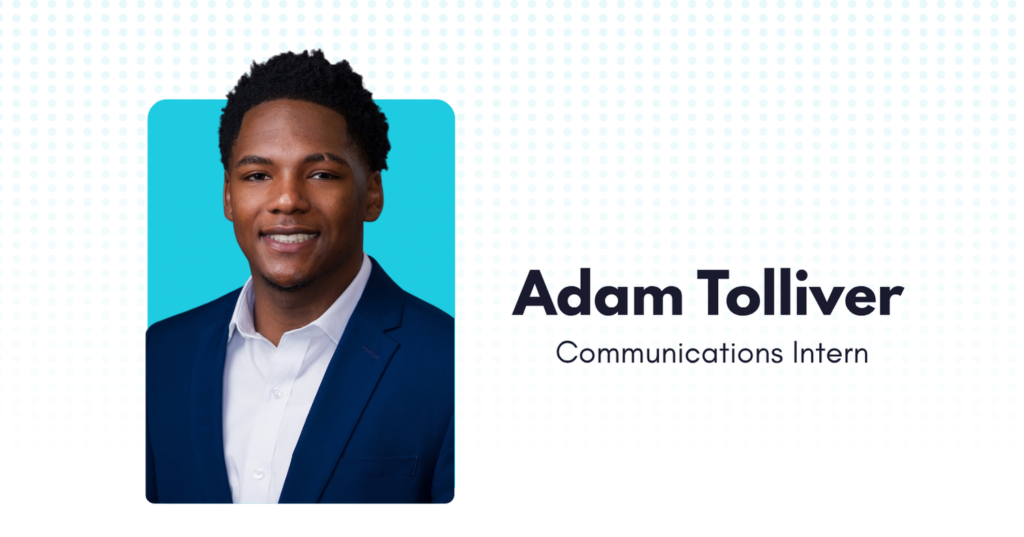
Adam Tolliver, Communications Intern
“My name is Adam Tolliver, and I was born and raised here in Jackson, MS,” he said. A rising junior at Jackson State University, studying Integrated Marketing Communications, Adam came in passionate about creative storytelling and clear about why he wanted to do it here.
“I wanted to be part of work that directly impacts communities and addresses challenges that affect people’s everyday lives.”
During his time, he learned how to develop a solid social media campaign through collaboration and feedback amongst the team. Somewhere in between, he worked his way through the Foundation’s historical archives, which included decades of an organization’s memory, organized and labeled.
Then came Giving Circles, and the work shifted to more hands-on—understanding what it means to put communications in action.
Adam stepped into his role further by understanding what it takes to plan and put on an event. He captured footage, designed graphics, and video for the event. He even learned some unexpected decor skills like building a balloon arch and decorating tables. He learned what it meant to show up with all hands on deck.
“This experience allowed me to step outside of my traditional communications role and develop new skills in organization, teamwork, and attention to detail,” he said. What stayed with him wasn’t the setup, though. It was the room once it filled.
“Seeing the impact of our collective efforts and how everything came together was a rewarding experience.”
That’s also where the bigger shift happened. Adam arrived understanding the region’s problems. He left having met the people already working on them.
“My internship experience opened my eyes to the many people and organizations working every day to create meaningful, tangible change in the Mid South,” he said. “I’m grateful that this internship gave me the opportunity to meet those changemakers firsthand and witness the passion, collaboration, and commitment that drive their work.”
He came looking for clarity about his career. He found it along with a list of fruitful connections that he will carry throughout his career.
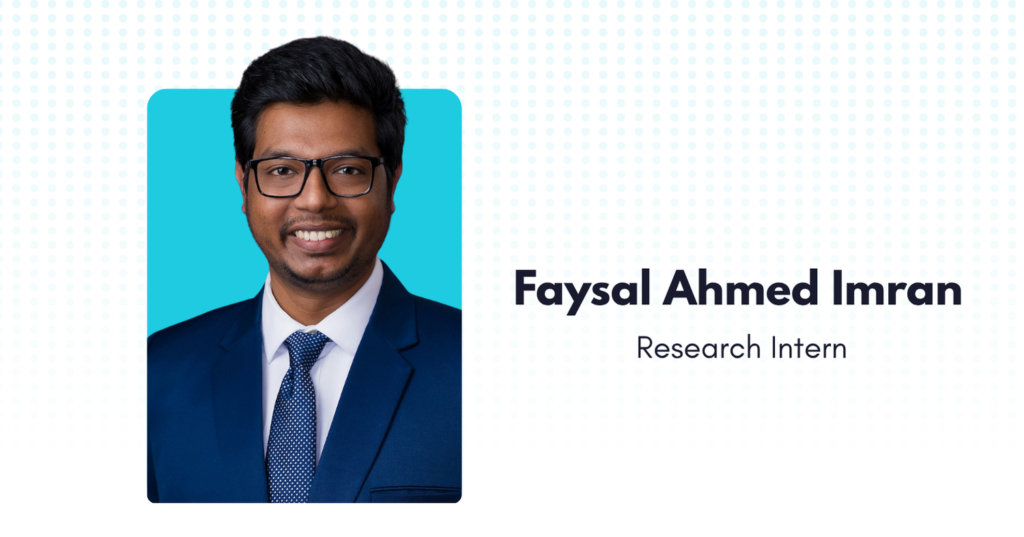
Faysal Ahmed Imran, Research Intern
A graduate student in Jackson State’s Department of Epidemiology and Biostatistics, originally from Bangladesh, he returned this year for his second consecutive summer with the Foundation.
What brought him the first time was a gap in his training.
“I was looking for real world experience in community-based epidemiological study and data analysis,” he said. “The Foundation’s mission extends beyond identifying challenges. It actively invests in partnerships, strategies, and community-driven solutions.”
Literature reviews, public health surveillance data, government reports, and scientific publications were all familiar raw materials of academic epidemiology. The topics at hand were all important hot topics of discussion in our region—maternal health, mental health, gun violence, obesity, civic engagement, and community resilience. Every one of them a real problem attached to real people.
“These projects required integrating evidence from diverse sources into clear, data-driven analyses that could inform decision-making,” he said of the regional public health reports he’s proudest of.
Somewhere in that work, the way he understands his own field shifted.
“The value of research is measured not only by the quality of the evidence, but also by how effectively that evidence reaches communities and informs action,” he said. “One of the most valuable lessons I learned was how to transform complex research into clear, actionable insights,” he said. “This experience strengthened my ability to bridge rigorous science with real-world impact.”
He leaves with his direction sharpened and a clear pathway, in his words, from epidemiological research to the places it actually lands.
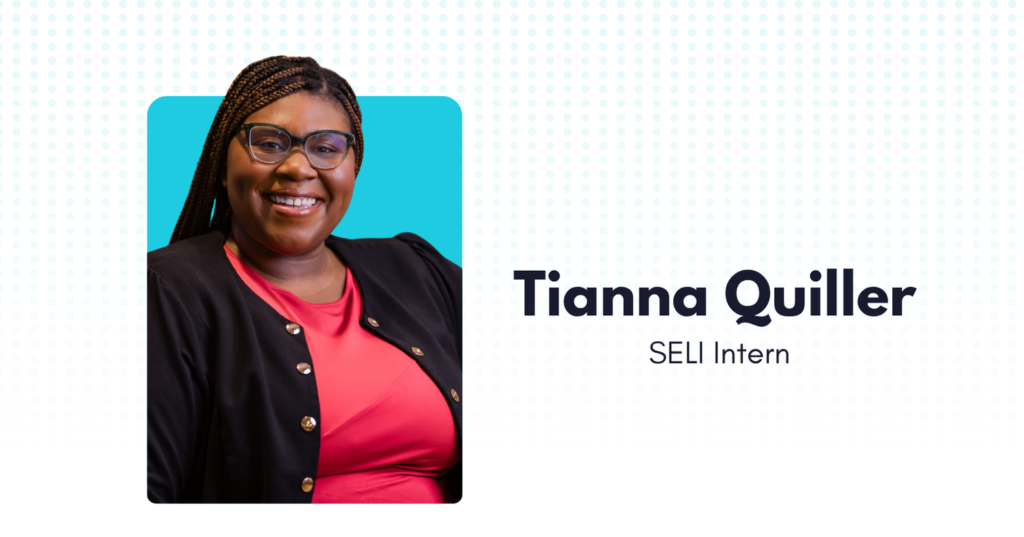
Tianna Quiller, SELI Fellow
A Special Education administrator at the elementary level in Atlanta and a doctoral candidate in Vanderbilt University’s Education Leadership and Policy program, Tianna showed up remotely, but her impact and work was felt greatly during her internship.
She had come looking for a wider view. “I hoped to learn more about how nonprofits contribute to the educational landscape beyond the classroom,” she said. “I was interested in understanding how they partner with schools, influence policy, and support communities to advance educational equity.”
What that meant in practice was state budgets, funding formulas, enrollment data, legislative text, and academic literature across Mississippi, Louisiana, and Arkansas at once. Out of it, she built three state-specific reports on early childhood education and a cross-state policy memorandum comparing state-funded Pre-K systems,
“Bringing together research from multiple sources to develop evidence-based policy recommendations for expanding access to state-funded Pre-K was especially rewarding,” she said, “because it demonstrated how research can inform decision-making and support educational equity.”
Tianna visited a preschool participating in the Mississippi Early Learning Collaborative and spoke with an early learning advocacy organization. “Seeing the program in action and talking with educators, directors, and children helped bring the policy research to life,” she said. “It reinforced for me that behind every policy decision are real classrooms, real educators, and real children whose experiences are directly shaped by those decisions.”
She also found something in Mississippi she wasn’t expecting to find.
“I was pleasantly surprised by how well-developed Mississippi’s early learning landscape is,” she said. “While there is still work to be done, I saw a strong infrastructure of partnerships, policies, and programs supporting young learners.”
She’s headed into a dissertation capstone on community engagement with a historic orchestral organization, and she’ll carry the research skills she built here into it. She’s also leaving with a research interest she didn’t arrive with, and a deepened conviction about investing in children from birth to three.
Advice to Future Interns
“Be prepared to be inspired,” Adam said. “Being surrounded by passionate individuals who are deeply committed to creating positive change is both motivating and inspiring.”
“Be curious, embrace every opportunity to learn, and approach each project with an open mind,” Faysal said. “You will gain far more than technical experience.”
“Be proactive and comfortable working independently,” Tianna said. “Much of the work requires managing your own time and taking initiative, but it is incredibly rewarding.”
The Impact
Three people arrived here from three different places, with three different degrees, working on three different questions. Here’s how they described the year in one sentence.
Educational and transformative, Adam said. A changed understanding of how evidence becomes lasting impact, Faysal said. An expanded perspective on educational equity, Tianna said.
Which is another way of saying this: they came to learn about the Mid South, and they left more committed to it than when they arrived.