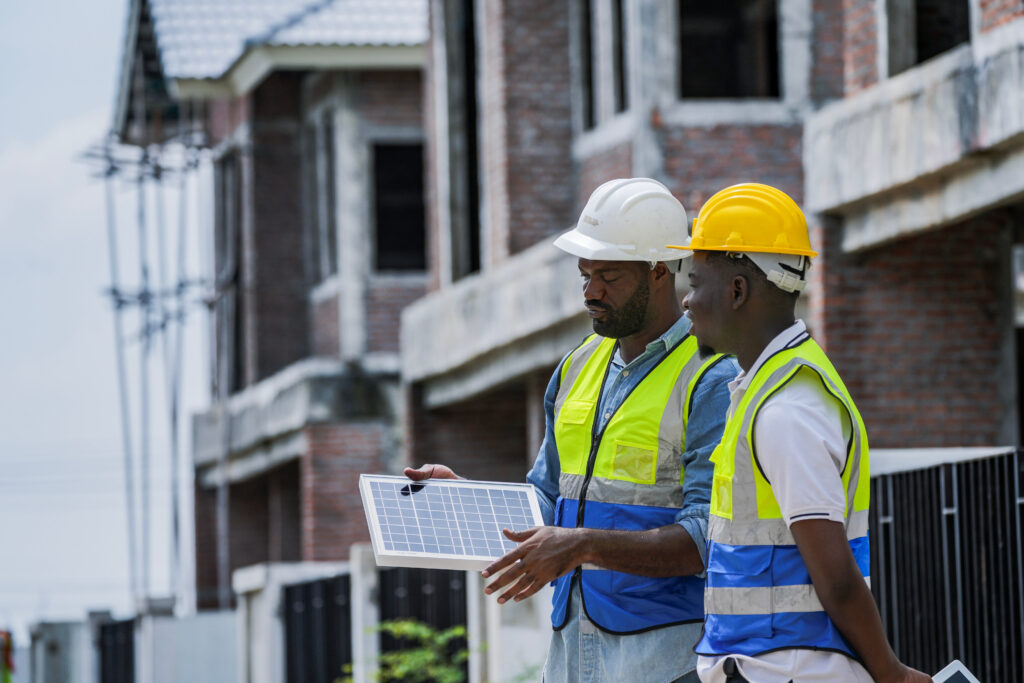
Ask anyone who grew up watching their family stretch one paycheck across a whole month, what does it mean to have a job? A steady job with fair pay means health insurance when the baby gets sick. It means a little something put away for a rainy day, and a car that starts in the morning. It means a parent who can be at the ballgame instead of working a third shift to cover the light bill.
So, when we talk about workforce investment, we’re not only talking about training programs and certifications. We’re talking about what happens to a family, and then a whole community, when people finally get a fair shot at work that can carry them. With a true economic investment in the workforce, communities have a real opportunity to thrive.
THE NUMBERS TELL A STORY
Across the Mid South, too many families are working hard and still coming up short. In 2024, Louisiana had the highest poverty rate in the nation at 18.7%, with Mississippi close behind at 17.8%. Arkansas’s rate was 15.5%. The national rate was 12.1%.
Incomes tell the same story. Arkansas, Louisiana, and Mississippi, along with West Virginia, had the lowest median household incomes in the country in 2024. Mississippi’s was the lowest of any state, at $59,127, compared with a national median of $81,604.
Labor force participation, the share of adults who are working or looking for work, is also among the lowest in the country across our three states. In March 2025, it stood at 56.1% in Mississippi, 57.9% in Louisiana, and 58.4% in Arkansas. Those gaps reflect real barriers: no reliable ride to work, no affordable childcare, no clear path from a training class to a job that pays.
WHAT THE RESEARCH SHOWS
Here’s the good news: we know that the right kind of workforce investment pays off, and keeps paying off for years.
Some of the strongest evidence comes from sector-based training programs, which prepare people for in-demand jobs in specific industries like health care and technology and connect them directly with employers. In San Antonio, Project QUEST participants were earning more than $5,000 a year above a comparison group nine years after they enrolled, with gains that held for as long as 11 years. Per Scholas, an IT training program, raised participants’ earnings by about $6,000 a year, and those gains lasted.
Economists studying these programs found that participants’ earnings gains likely outweigh what the programs cost by the ninth year. In other words, the investment more than pays for itself.
But design matters. Not every program produces lasting results. The ones that work tend to share a few things in common: training tied to jobs that actually exist, strong relationships with employers, and support with the everyday barriers that keep people from finishing.
WHAT HAPPENS TO A COMMUNITY
When one person moves into a stable, well-paying job, the benefits don’t stop with them. That paycheck gets spent at the local grocery store, childcare, and doctor visits copays. Families gain health coverage and can plan beyond next week. Children grow up seeing a path forward that looks possible.
Rodney Washington, who led evaluation for the Foundation’s 2025 workforce grantee cohort and grew up in the Delta, put it this way:
“These employment opportunities lead to not only jobs, but insurance, retirement, and savings. For a family that’s never had a savings account or health plan, this is bigger than just a paycheck.” — Rodney Washington
That’s what economic mobility looks like on the ground. A family taking a step that makes the next step possible, and a community that grows stronger every time someone does.
WHAT WE’VE SEEN CLOSE TO HOME
In 2025, the Foundation for the Mid South launched Moving Mississippians Forward Through Employment, a workforce development initiative that awarded grants to 10 organizations across Jackson and the Mississippi Delta. The goal was simple: help people cross the bridge from training to a paycheck, and take on the barriers that keep them from getting there.
Grantees have now submitted final reports, with some focusing on how direct training tells a powerful story. Together, they served more than 790 Mississippians. At least 670 participants earned credentials, and more than 540 moved into jobs.
In Greenville, Delta Compass served 687 people in healthcare and skilled-trades training. Of those, 595 earned credentials and 524 were placed in jobs. The organization also used its grant to attract more than $750,000 from the Delta Regional Authority and a $70,000 investment from the Regions Foundation.
The Reuben V. Anderson Center for Justice changed course midway through its project to focus on single mothers looking for work. Every one of its eight graduates landed a job, and the Center went on to secure a $100,000 grant from NEO Philanthropy’s Economic Mobility Opportunity Fund.
In rural communities, the wins look like credentials and new infrastructure. In Yazoo City, Dream Innovations helped 28 participants earn credentials through technology and digital-literacy training. In Belzoni, 13 of 14 participants in the Humphreys County School District program earned credentials. And the Holmes County Consolidated School District, where 32 participants completed training, became an approved nursing assistant training facility through its partnership with CrossRoads CNA Mentorship Academy.
Deep South Today took a different approach through its Clocked In project, pairing workforce journalism with a job expo that brought together more than 30 employers and reached more than 680 people.
Grantees were just as clear about what still stands in the way. Nearly all of them named transportation, childcare, and hiring timelines that don’t line up with training schedules as recurring obstacles. Cassio Batteast of the Foundation named those same barriers when the grants were announced:
“Transportation, childcare, housing, those are barriers, especially in rural communities. If I’m in training, where do I take my kid? I’m not making money during training. That’s why wraparound services matter.” — Cassio Batteast, Program Officer
Several grantees also recommended bringing employers in earlier and building stronger systems to follow participants after they finish. Those lessons are what make the next round of investment smarter.
WHERE THIS GOES FROM HERE
The Mid South has never lacked people willing to work. What’s been missing is the connection between that willingness and real opportunity. When communities invest in closing that gap, families gain stability, local economies gain strength, and the next generation gains a reason to believe their future can be built right here at home.
As Batteast said when the cohort launched, “It really doesn’t take a massive investment to make change. It takes an intentional one.”
Learn more:
Sources: